
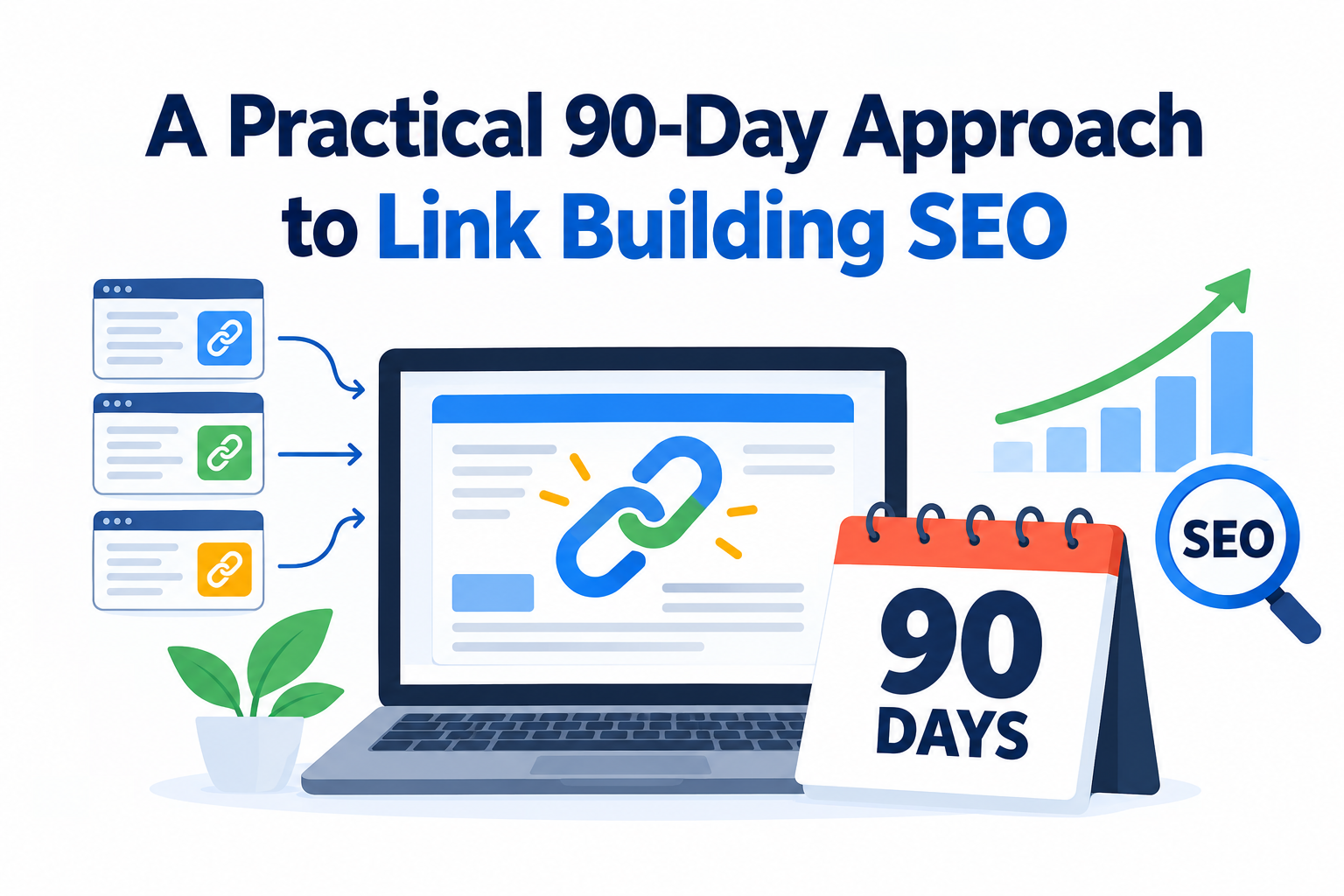
For a small business, earning links from other websites can feel like a task with no clear finish line. A more useful approach is to treat link building SEO as a focused, three-month project: choose pages worth promoting, identify publishers whose readers might value them, and build relationships steadily. The goal is not to collect links at any cost. It is to make useful pages easier to discover and strengthen their reputation over time.
Start with pages that deserve attention
Before contacting publishers, decide which pages you want to improve. A link-building campaign works best when it points to material that serves a clear purpose, such as a detailed service page, original research, a practical guide, or a resource that answers a common customer question. Sending people to a thin page with little information is unlikely to help your business or the reader who follows the link.
Review your site’s organic performance and business priorities. Look for pages that already attract impressions, are relevant to your services, and could benefit from more authority. Pages ranking just outside the top results may be promising targets, but rankings are only one consideration: a page should also be accurate, easy to navigate, and useful enough that another site would have a reason to cite it.
Build a realistic three-month plan
Breaking the work into stages makes the process manageable. During the first month, audit your pages, compare competitor coverage, and make a shortlist of publishers. In the second month, improve target content and begin personalized outreach. In the third, follow up appropriately, develop new contacts, and review what has produced replies or links. This 90-day link-building plan offers a useful framework for organizing those activities, including competitor research, publisher selection, and progress tracking.
Set a weekly time budget and a reasonable outreach target rather than promising a particular number of backlinks. Editorial decisions belong to publishers, so results are never fully under your control. A consistent process gives you a better chance of earning relevant links without resorting to rushed messages or questionable shortcuts.
Find publishers with a genuine connection
Make a list of websites that reach people your business wants to serve. These might include trade publications, local business resources, professional associations, specialist blogs, or complementary companies. Relevance matters more than a large audience alone. A link from a respected site in a related field may introduce your work to a more suitable reader than a link from a general site with little connection to your subject.
Check each prospect before reaching out. Read recent articles, look at the topics it covers, and consider whether your page would add something useful. A short note explaining the fit is more persuasive than a generic request sent to dozens of editors. You could suggest a data point, offer an expert explanation, or point out a resource that complements an existing article. If there is no clear benefit to the publisher’s readers, choose another prospect.
Give people something worth citing
Outreach can bring attention to strong content, but it cannot make weak content valuable. Consider what would make your target page more useful than competing resources: clear instructions, first-hand experience, original examples, a helpful checklist, or information presented in a format people can quickly understand. Keep claims specific and support them with appropriate evidence. Make sure the page loads well on mobile and that its purpose is apparent from the opening section.
Visuals can also improve a resource, particularly when they clarify a process or make information easier to share. If design work is outside your team’s strengths, decide whether a freelancer, agency, or in-house hire suits the project. For businesses weighing where to hire graphic designers, Osdire’s hiring guide explains how to compare those options, review portfolios, set a budget, and prepare a brief. A designer can help turn a useful idea into a clearer asset, though the substance still needs to come from your business.
Keep anchors natural and measure progress
When another site links to your page, the anchor text should make sense in its sentence. Avoid trying to prescribe the same exact keyword for every link. Repeated, unnatural wording can make links look manipulated and can read poorly to visitors. Publishers should have editorial control over how they describe and link to your material.
Track the campaign in a simple spreadsheet or project board. Record the publisher, contact details, relevant page, date contacted, response, and next step. Separately monitor the links that appear, referral visits, and changes in the performance of your target pages. Search rankings can move for many reasons, so assess several indicators over time rather than attributing every change to one new backlink.
Make the routine sustainable
At the end of 90 days, review which topics earned interest, which publishers were a good fit, and where your outreach could be more specific. Keep successful relationships active by sharing useful updates and contributing thoughtfully when a real opportunity arises. Link building is most effective as part of sound marketing: publish material that helps people, make it easy to find, and earn mentions through relevance and trust. A steady, well-documented routine is more durable than a burst of activity aimed only at link counts.